
De-addiction counselling that breaks the psychological cycle of substance abuse.
Detox clears the body. Counselling changes the patterns that brought the body there. At SimranShri, de-addiction counselling is psychologist-led, evidence-based, and integrated into the full treatment arc — not a standalone service.
Confidential · No pressure · Available 24 hours · Government approved
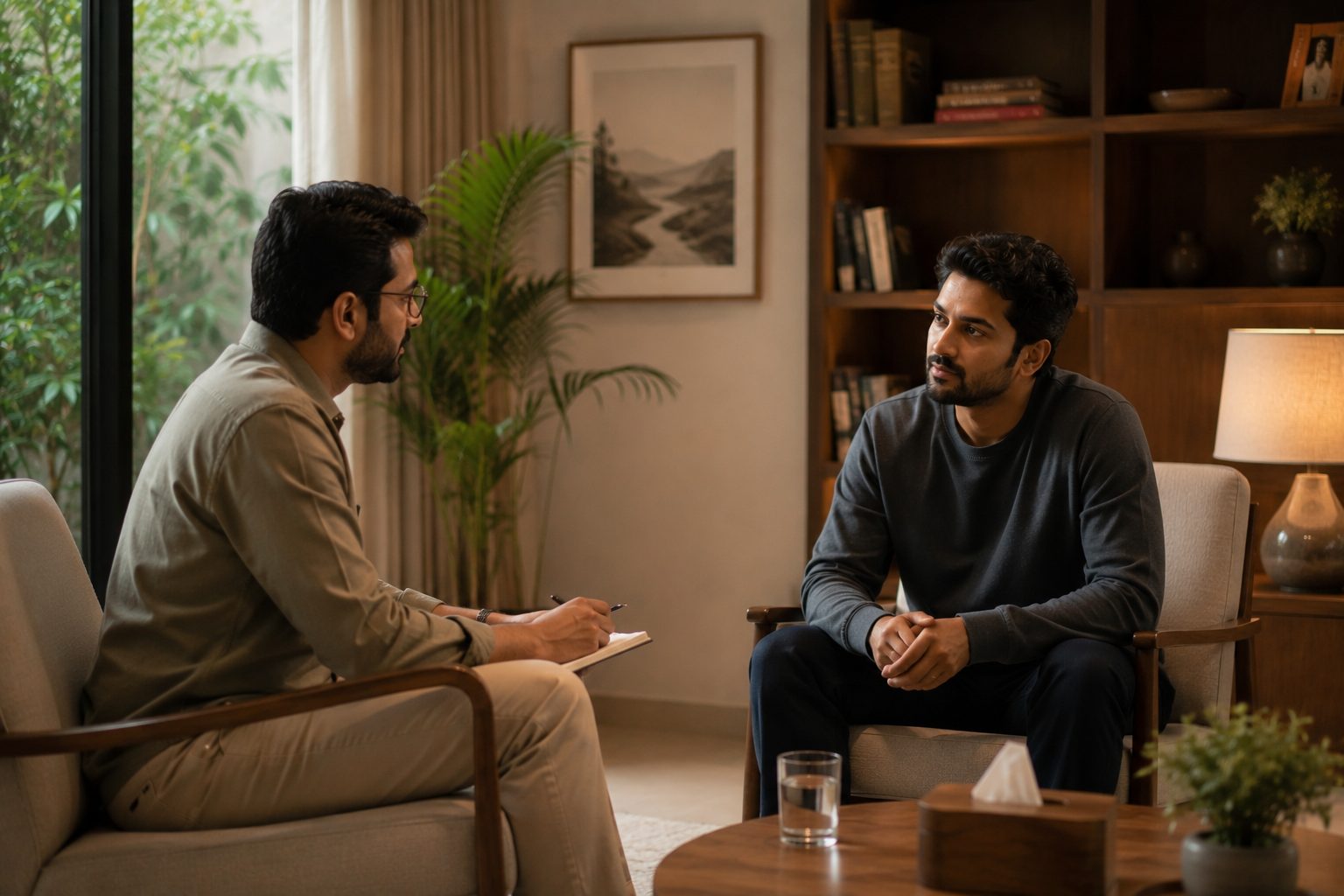
What is de-addiction counselling?
De-addiction counselling is the psychological work that sits at the heart of addiction recovery. It is not generic talk therapy and it is not a support group. It is structured, evidence-based clinical work — led by qualified psychologists trained specifically in addiction counselling and rehabilitation — that addresses the thought patterns, behavioural triggers, emotional drivers, and coping deficits that sustain substance use.
At SimranShri, de-addiction counselling is integrated into every treatment programme. It runs concurrently with withdrawal monitoring, continues through the main residential therapy phase, and extends into the continued aftercare window. Individual counselling targets the patient’s specific triggers and patterns; group therapy builds peer accountability; family sessions address the relational dynamics surrounding the addiction.
The methods used — cognitive behavioural therapy, motivational interviewing, the 12-step framework, dialectical behaviour therapy — have decades of outcome research behind them. What matters clinically is not the brand of therapy but whether it is delivered skilfully and matched to the patient. Our psychologists have addiction-specific training and deliver addiction-specific interventions.
When de-addiction counselling is essential
Some patterns below indicate that counselling — beyond detox alone — is clinically necessary for sustained recovery.
Psychological patterns
- Drinking or using to cope with stress, boredom, or conflict
- Persistent thoughts about the substance even when abstinent
- Shame spirals that trigger further substance use
- Inability to refuse substances in specific social or family situations
- Strong emotional link between substance use and self-identity
- History of failed willpower-only attempts to stop
Behavioural triggers
- Specific times of day associated with substance use
- Particular people or places that reliably lead to relapse
- Emotional states (anger, loneliness, anxiety) tied to use
- Celebrations, holidays, or life events as reliable relapse triggers
- Stress responses that reach for substances before other coping tools
- Automatic substance thoughts in response to specific cues
Post-detox signals
- Physical withdrawal completed but cravings remain
- Sober but experiencing emotional volatility
- Difficulty imagining daily life without the substance
- Relationships strained even after drinking or using stopped
- Boredom, emptiness, or loss of purpose without the substance
- Strong relapse thoughts in the weeks following detox
One or two patterns in isolation can be dismissed. Three or more, consistently, warrant a clinical conversation.
Who de-addiction counselling is for
Families arriving at SimranShri rarely look the same. Click a profile below — chances are you’ll see yourself in one of them.
The patient post-detox
You completed detox. Physical withdrawal is behind you. But the thoughts, the cravings, and the triggers are not. Counselling is what closes the gap between physical abstinence and sustained recovery.
The de-addiction counselling pathway
Counselling at SimranShri follows a structured clinical arc — not open-ended sessions, but a sequenced programme matched to the patient’s stage of recovery.
Assessment & trigger mapping
Detailed assessment of substance-use history, trigger patterns, coping deficits, and relational context. Produces the individualised counselling plan.
Motivational interviewing
Early sessions focus on strengthening the patient’s commitment to change. Motivation is volatile in the first weeks; structured MI sessions stabilise it.
CBT trigger work
Cognitive behavioural therapy sessions targeting identified triggers — thought restructuring, behavioural alternatives, coping-skill rehearsal. Daily during inpatient; weekly outpatient.
Group & family sessions
Group therapy builds peer accountability. Family sessions address the relational dynamics. Together they complement individual work.
Aftercare counselling
Post-discharge individual sessions continue monthly through aftercare. NA/AA peer support integrated. Rapid re-engagement protocols for relapse warning signs.
Evidence-based counselling methods
The methods used in our de-addiction counselling programme have established outcome research. Applied individually by a qualified psychologist, not as a rigid protocol.
Cognitive Behavioural Therapy (CBT)
The most-researched therapy for addiction. Identifies addiction-linked thought patterns and situational triggers, then builds concrete behavioural alternatives.
Motivational Interviewing (MI)
Counselling approach that strengthens the patient’s own commitment to change. Particularly valuable in the early weeks when ambivalence is high.
Dialectical Behaviour Therapy (DBT)
Skills-based approach focused on emotional regulation, distress tolerance, and mindfulness — used where emotional dysregulation drives substance use.
12-step framework integration
Structured introduction to AA or NA steps and principles — connected to local meetings during aftercare.
Contingency management
Evidence-based reinforcement of abstinence milestones — particularly effective for stimulant addictions.
Relapse prevention therapy
Structured work on identifying high-risk situations, warning signs, and concrete response plans. A cornerstone of aftercare counselling.
Group therapy
Peer-accountability sessions led by the psychologist — patients work through common triggers and coping strategies together. Evidence shows group work substantially reinforces individual therapy gains.
Why families choose SimranShri counselling
Psychologist-led, addiction-specific
Our psychologists have addiction-specific training. Not general mental-health counsellors — clinical specialists in substance-use disorder.
Integrated with structured support
Counselling runs concurrently with detox and residential treatment — not as a separate service requiring its own referral and logistics.
Outpatient + aftercare included
Post-discharge counselling continues monthly through the continued aftercare window. Relapse-risk peaks months after discharge; counselling follows that curve.
Remote delivery available
For patients and families outside Delhi NCR, secure video counselling is available — same psychologist, same clinical quality.
What de-addiction counselling achieves
Counselling is the mechanism by which detox becomes recovery. These outcomes reflect the combined detox + counselling + family + aftercare programme.
Intensive de-addiction counselling runs 6 to 12 weeks (daily during inpatient, weekly during early outpatient), with monthly counselling sessions continuing through the continued aftercare window. Total counselling arc is typically 14+ months from admission to aftercare completion.
Before you call, here’s what most families want to know.
If your question isn’t here, call us. Our admissions team answers honestly, at any hour.
De-addiction counselling at SimranShri is structured, evidence-based psychological work — CBT, motivational interviewing, DBT, and 12-step integration — delivered by qualified psychologists trained in addiction counselling and rehabilitation. It addresses the thought patterns and behavioural triggers that sustain substance use.
De-addiction counselling is addiction-specific. The methods, trigger-mapping, craving-management, and relapse-prevention frameworks are calibrated to substance-use disorder specifically — not to general emotional issues. Generic counselling is not sufficient for addiction recovery.
Yes. De-addiction counselling at our de-addiction centre begins during the detox phase (light sessions during acute withdrawal, intensifying as the patient stabilises) and continues throughout the residential programme and continued aftercare. Counselling and structured support run in parallel, not sequentially.
Yes, in specific cases. Outpatient de-addiction counselling is clinically appropriate for mild-to-moderate addiction, for patients stepping down from residential, or for family members. The initial assessment determines whether outpatient counselling alone is sufficient.
Our de-addiction counselling uses Cognitive Behavioural Therapy (CBT), Motivational Interviewing, DBT skills work, 12-step framework integration, contingency management, and structured relapse-prevention therapy. Methods are matched to the patient’s specific clinical presentation.
Yes. Family sessions are scheduled alongside individual counselling throughout the treatment arc. Family counselling rehab work is a clinical requirement at SimranShri — not optional — because addiction is a family disease and recovery requires the relational system to change alongside the patient.
Aftercare counselling continues monthly for continued support after discharge. This is when relapse risk peaks; continued counselling is what separates sustained recovery from a stabilised-then-relapse cycle.
Qualified psychologists with addiction-specific training deliver all de-addiction counselling at SimranShri. Not general counsellors, not peer supporters (who have a different, valuable role), not non-clinical staff.
Yes. For patients and families outside Delhi NCR — and for outpatient aftercare sessions — secure video counselling is available. Same clinical quality, same psychologist, just delivered remotely.
Many nasha mukti counselling offerings in India consist of peer talks and basic support — not structured, psychologist-led CBT or MI. SimranShri is a Government approved rehabilitation centre with qualified addiction psychologists delivering evidence-based de-addiction counselling. The distinction matters clinically.
Continue exploring — adjacent treatment pathways.
You have done the hardest part— you started looking.Now let us help.
One confidential call. Our admissions team listens, assesses, and tells you — honestly — what de-addiction counselling at SimranShri would look like for your family.
Confidential · Government approved · 24×7